Reimagining Development in Africa: Why the Farreach Framework Matters Now More Than Ever
Walk into almost any development conversation today, whether at a global summit, a donor roundtable, or a rural community meeting, and you will hear a familiar frustration: “We’ve invested so much, yet the impact feels limited.”
This is not a funding problem alone. It is a systems problem.
Across Africa and much of the Global South, development efforts have often struggled not because of a lack of intention, but because of how those efforts are designed, communicated, and sustained. Projects are launched with optimism, yet too many fail to achieve lasting change. Communities are consulted, yet rarely empowered. Innovations are developed, yet seldom translated into meaningful, lived realities.
This is the gap the Farreach Framework was created to close.
The Problem Beneath the Problem
At the heart of many development failures lies a simple but critical disconnect: the people most affected by development are often the least involved in shaping it.
Participation, in many cases, has become procedural rather than meaningful. Communities are invited to meetings, but not into decision-making. Communication flows downward, not outward. Ownership remains external, and when funding cycles end, so does the impact.
This creates a recurring pattern:
- Projects that look successful on paper but fail in practice
- Communities that feel disengaged or overlooked
- Interventions that struggle to sustain themselves
The result is not just inefficiency, I call it, a lost opportunity for transformative change.
A Different Way Forward
The Farreach Framework offers a fundamentally different approach.
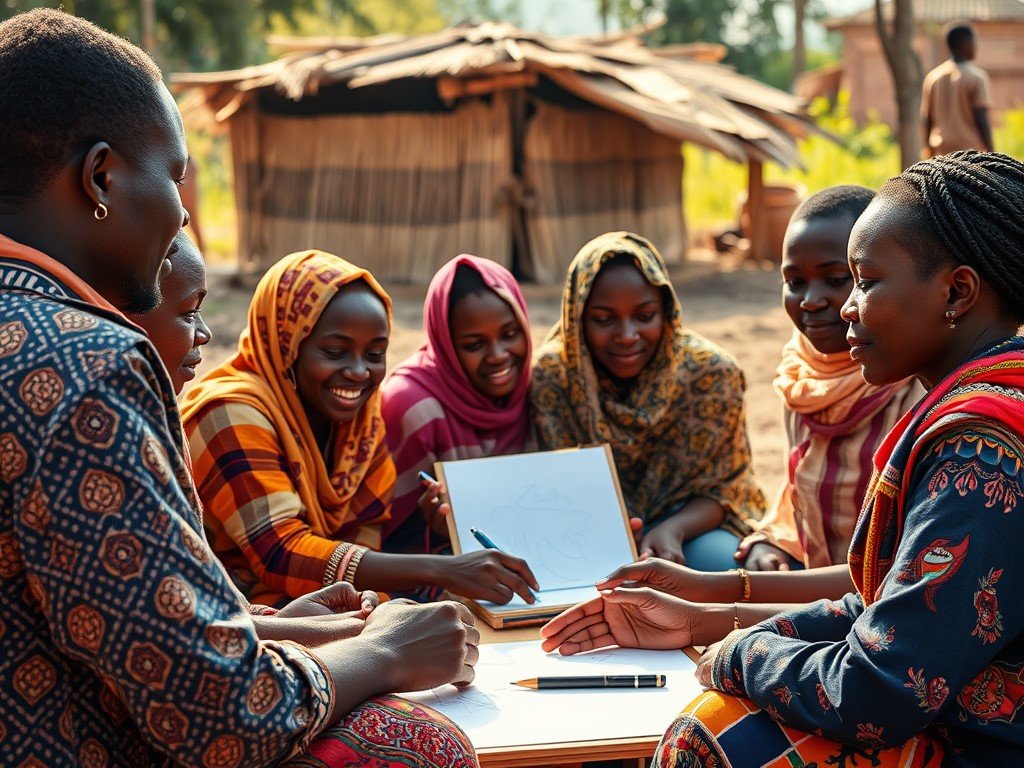
Instead of treating development as a linear process driven by external actors, Farreach reframes it as a collaborative, communication-drivensystem where all role-players, especially communities, play central roles.
It moves development from:
- Consultation → Co-creation
- Beneficiaries → Co-owners
- Top-down messaging → Participatory dialogue
This shift may sound simple, but its implications are profound.
When communities help design solutions, those solutions are more relevant. When communication becomes a two-way process, trust grows. When ownership is shared, sustainability becomes possible.
From Theory to Practice
What makes Farreach particularly compelling is that it is not just a conceptual model, it is operational.
Through Farreach International, the framework is translated into strategy, systems design, and innovation. Development actors are supported to rethink how they engage role-players, design interventions, and measure success. Tools like the FarreachOne Toolkit provide practical infrastructure for integrating participation, communication, and learning into every stage of a project.
At the same time, the Farreach Development Initiative brings the framework to life on the ground. Working directly with communities, local organizations, and institutions, it ensures that development is not only designed inclusively but implemented in ways that reflect real needs and lived experiences.
Together, these two arms form a complete ecosystem, bridging the gap between ideas and impact.
Why This Matters for Africa
Africa’s development landscape is rich with innovation, resilience, and potential. Yet many challenges persist not because solutions do not exist, but because systems fail to connect the right people, processes, and knowledge.
Farreach addresses this by focusing on three critical areas:
1. Restoring Balance in Decision-Making
It challenges the traditional power dynamics of development, ensuring that communities are not passive recipients but active architects of change.
2. Strengthening Communication Ecosystems
By embedding dialogue at the core of interventions, it builds trust, reduces resistance, and improves uptake, whether in health, education, or governance.
3. Ensuring Sustainability Beyond Funding Cycles
By fostering local ownership and adaptive learning, Farreach helps projects continue to evolve and thrive long after initial funding ends.
A Call to Rethink Investment in Development
For donors and development partners, the question is no longer just “What should we fund?” but “How should development be done?”
Investing in frameworks like Farreach means investing in:
- Better-designed interventions
- Stronger community relationships
- More sustainable outcomes
It means shifting from funding projects to strengthening systems.
The Opportunity Ahead
We are at a moment where the development community is actively searching for more effective, inclusive, and sustainable approaches. The Farreach Framework offers a timely and practical response to that search.
It does not claim to replace existing efforts, but to enhance them by making them more participatory, more adaptive, and ultimately more impactful.
For donors, partners, and change-makers, this is an opportunity to be part of a new direction in development, one where success is not defined solely by outputs, but by ownership, trust, and lasting transformation.
Because development works best not when it is delivered to people, but when it is built with them.